How to Identify a Genuine Silver Certification?
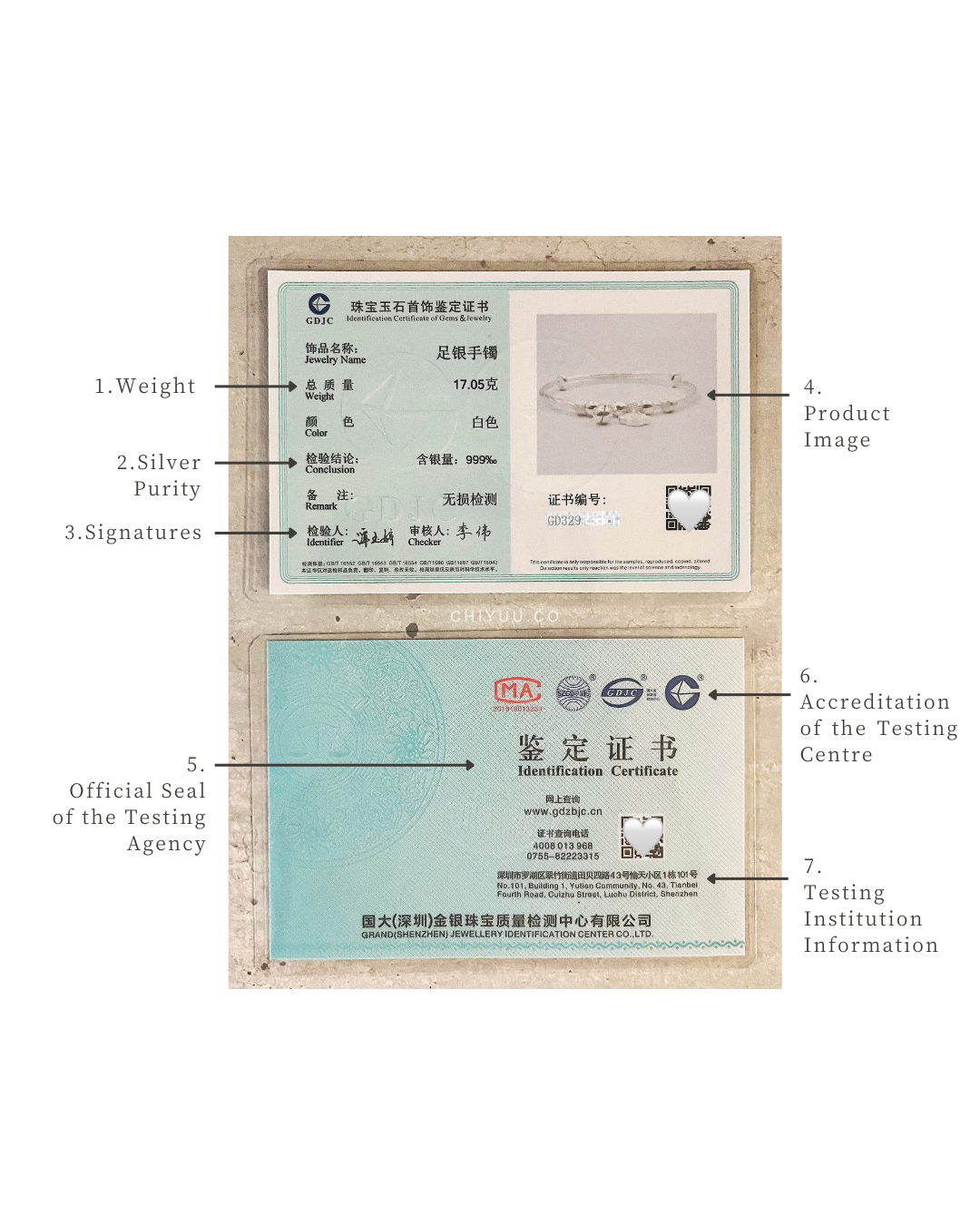
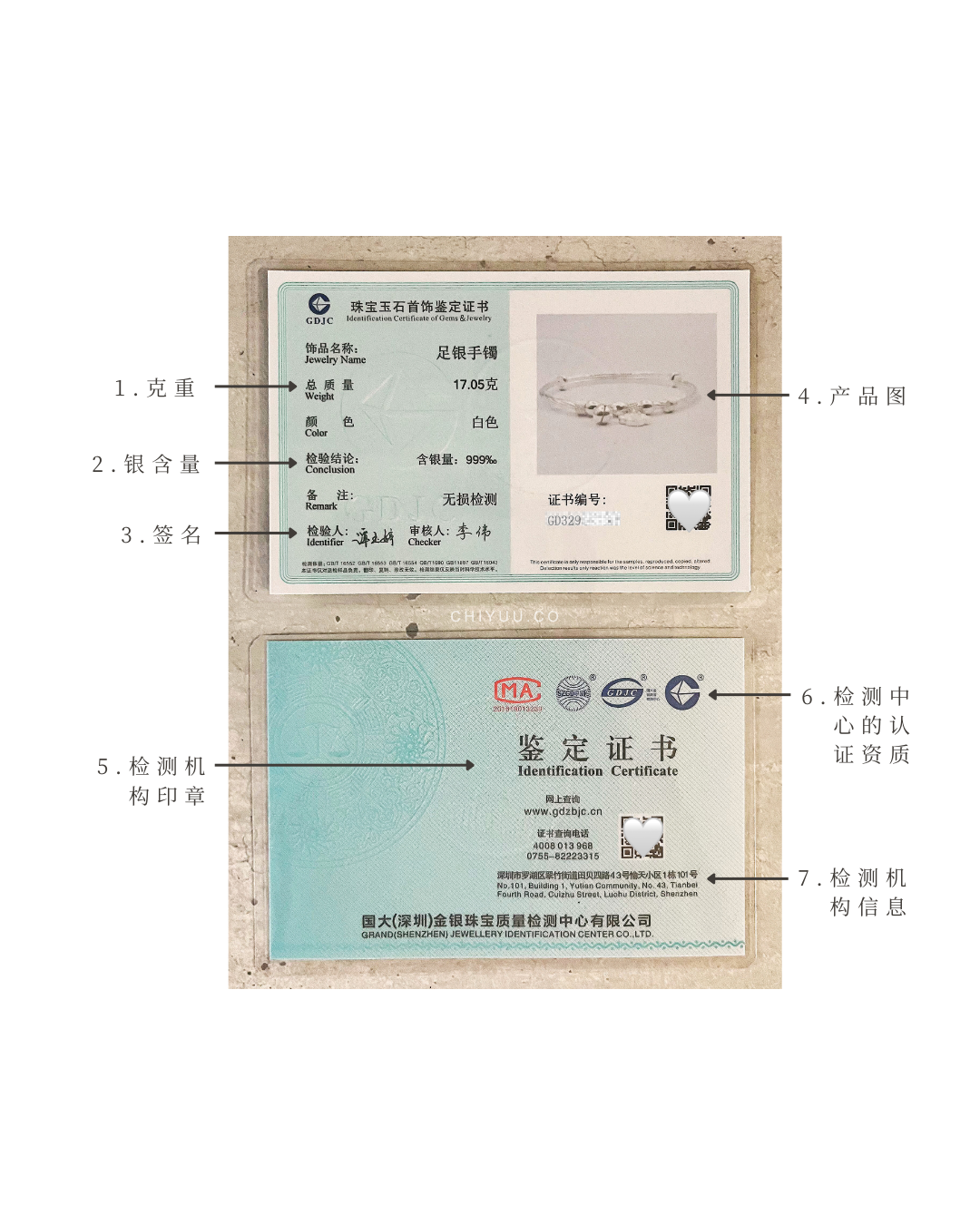
(1) Weight: A genuine one-item-one-certificate report will specify the exact weight of the bangle, accurate to two decimal places (e.g., 17.05 g). If the certificate only states “17 g”, “17 g (nominal)”, or gives a range such as “±2 g”, it is likely not an official certification. Certificates containing vague terms such as “subject to the actual item” are often mass-printed and cannot truly correspond to each individual piece.
(2) Silver Purity: Authentic certificates clearly indicate the silver content, such as 999% or 999.9%. If the purity is not stated, the authenticity of the certificate should be questioned.
(3) Signatures: Genuine silver certifications typically include handwritten signatures from both the appraiser and the reviewer. In contrast, fake certificates often use uniform computer-generated fonts, which lack authenticity.
(4) Product Image: A true one-item-one-certificate report includes a photograph of the actual bangle corresponding to the certificate. If the photo is missing or does not match the product, the certificate may be counterfeit.
(5) Official Seal of the Testing Agency: Authentic certificates must bear the official seal or embossed stamp of a recognised testing institution, ensuring the report’s legitimacy and legal validity. Certificates without such a seal should be treated with caution.
(6) Accreditation of the Testing Centre: A legitimate testing institution must be accredited and supervised by provincial, municipal, or national market regulatory authorities. The back of the certificate typically displays several accreditation marks, including the CMA mark, which is a fundamental requirement for authority and credibility. If these marks are missing, the certificate’s authenticity is doubtful.
(7) Testing Institution Information: A valid certificate should list the full name, address, telephone number, and official website of the testing agency. If the website cannot be accessed, the phone number is unreachable, or no public records can be found for the institution, the certificate’s authenticity is questionable.